

Slip ratings explained: what R11 means around a pool
Around a pool, feet are wet and often bare, so slip resistance matters more than almost anywhere else. Here is what slip ratings mean and what to look for.
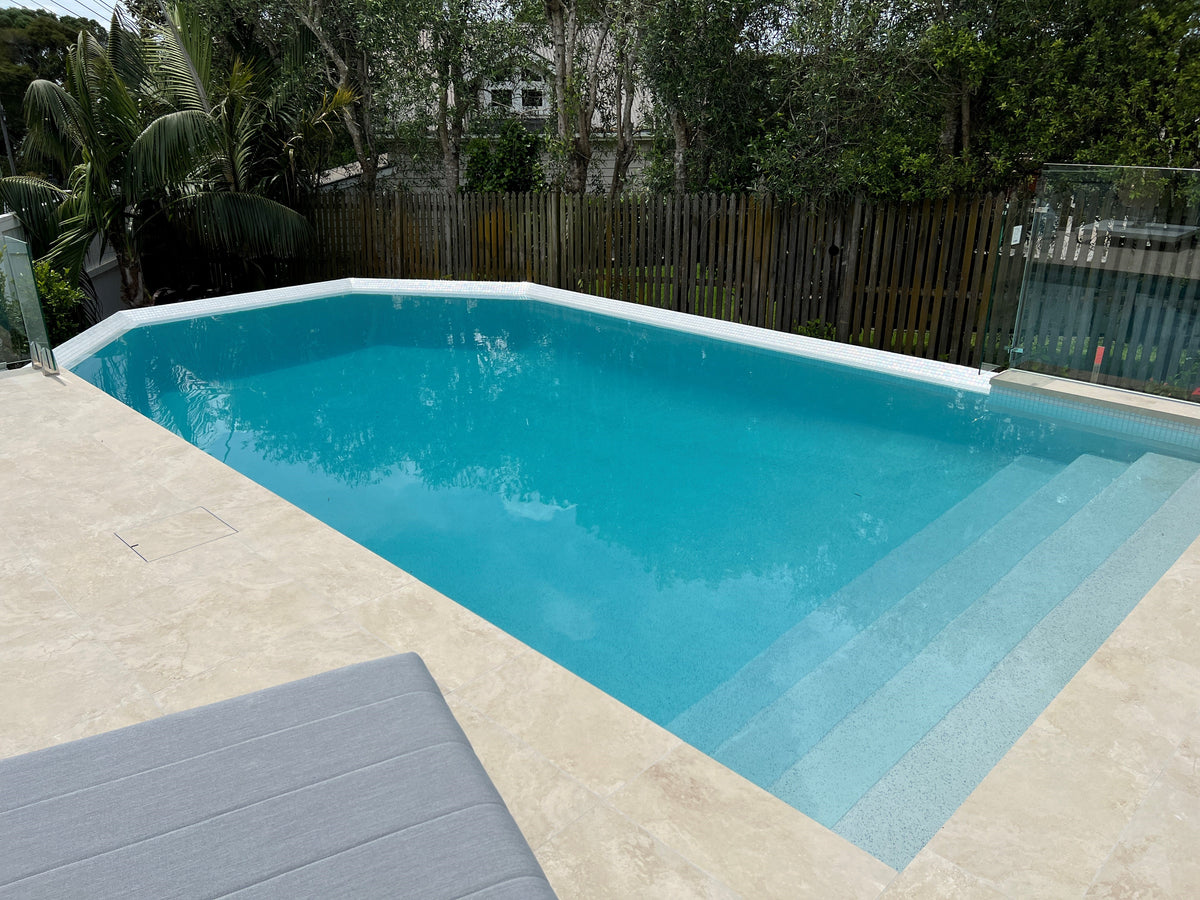
Pool surrounds are wet, used barefoot, and full of people moving quickly, often children. Choosing a surface with the right slip resistance is one of the most important decisions in your project.
How slip resistance is measured
R ratings (ramp test)
The R rating comes from the German DIN 51130 test. A person in safety shoes walks on an oiled tile on a ramp, and the angle is increased until they slip. The steeper the angle, the higher the rating.
| Rating | Slip angle | Typical use |
|---|---|---|
| R9 | 6–10° | Dry indoor areas |
| R10 | 10–19° | Indoor areas that sometimes get wet |
| R11 | 19–27° | Wet outdoor areas, pool surrounds, ramps |
| R12 | 27–35° | Commercial kitchens, very wet areas |
| R13 | over 35° | Heavy industrial areas |
P ratings (pendulum test)
In New Zealand and Australia, slip resistance is also measured with a pendulum test (AS 4586), giving a P rating from P0 to P5. This test can be done on wet surfaces and on site, and it is often referenced in specifications. Higher numbers mean more slip resistance.
Why R11 is the go-to for pool surrounds
R11 sits in the range intended for wet outdoor areas. It gives good grip underfoot when wet, without being so rough that it's uncomfortable for bare feet or hard to keep clean. All CMP porcelain tiles and coping we supply carry a minimum R11 rating.

Natural stone and slip
With natural stone, slip resistance depends mostly on the finish.
- Flamed and sandblasted granite: a textured surface with good grip when wet.
- Honed sandstone and travertine: smooth but not polished. Comfortable underfoot.
- Polished stone: not suitable around pools.
Slip test results for our products are on the Downloads page.
Keeping surfaces safe
- Clean regularly. Algae, mould and sunscreen build-up all reduce grip.
- Don't apply glossy sealers or coatings, which can make surfaces slippery.
- Choose a coping edge that's comfortable for sitting and climbing out. See our coping edge guide.
- For commercial and public pools, check the slip resistance your designer or the Building Code requires.
Slip ratings compare products tested in the same way. Real-world safety also depends on cleaning, drainage, and how the area is used.