


Natural stone
Sandstone, granite & travertine
Ethically sourced natural stone for paving, pool coping, steps and feature walls. Every piece is unique, ages gracefully and adds lasting value to your home.
- Free samples NZ-wide
- 45 years supplying NZ
- Showroom in Wairau Valley

Sandstone
Sandstone
Our most popular natural stone. Sandstone ranges from white to peach and suits steps, entranceways, patios, pool surrounds and feature walls, inside and out. It is relatively soft and porous, so we recommend sealing it.

Granite
Granite
A hard, coarse-grained igneous stone of quartz, feldspar and mica. Every slab carries its own pattern and veining, giving a natural, one-of-a-kind look that stands up to heavy use. Choose from grey, black and Fantasy granite in flamed or sandblasted finishes, plus black flamed granite cobbles.

Travertine
Travertine
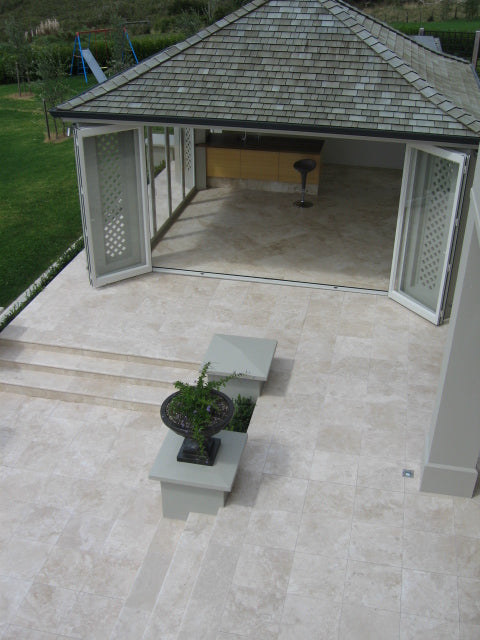
A dense, banded limestone suited to floors, walls, stairs, entrances and living areas, indoors and out. Cool underfoot and timeless around a pool.



01 — Features
Natural stone features
Durable and weather-resistant
Built for heavy use, UV and New Zealand’s varied climate.
Non-slip finishes
Treated surfaces for wet areas around pools and patios.
Sizes and profiles
Bullnose (B), square edge (A) and rebated copings, plus tiles, pavers and cobbles. Every product has a dimensioned drawing.
Cool underfoot
Lighter stones stay comfortable around pools in summer.
Ages gracefully
Retains its character for decades with minimal maintenance.
Adds property value
A timeless upgrade for lifestyle and resale.
02 — Specifications
Natural stone specifications
- Stones
- Sandstone, granite (grey, black and Fantasy), basalt and travertine
- Uses
- Paving, pool coping, steps, walls, interiors
- Coping profiles
- Bullnose (B), square edge (A) and rebated drop face
- Finishes
- Honed, flamed, sandblasted and natural split, with non-slip options for wet areas
- Sealing
- Recommended for all natural stone
- Tolerance
- ±2mm on stated sizes
- Natural variation
- Colour, marbling and veining vary from piece to piece
Brochures & technical data
04 — Enquire
Enquire about Natural stone
Tell us about your project and our team will come back to you with advice, pricing, availability and lead times. Prefer to talk? Call 0800 446 378.
- Phone
- 0800 446 378 · 09 415 4588
- reception@ssld.co.nz
- Showroom
- 98 Hillside Road, Wairau Valley, Auckland 0627
- Hours
- Monday to Friday 8am – 5pm
Saturday & Sunday by appointment