

Laying 20mm porcelain: slab, sand and cement, or pedestals?
20mm outdoor porcelain is strong enough to be laid three different ways. The right method depends on what is underneath: a concrete slab, compacted ground, or a deck or membrane.
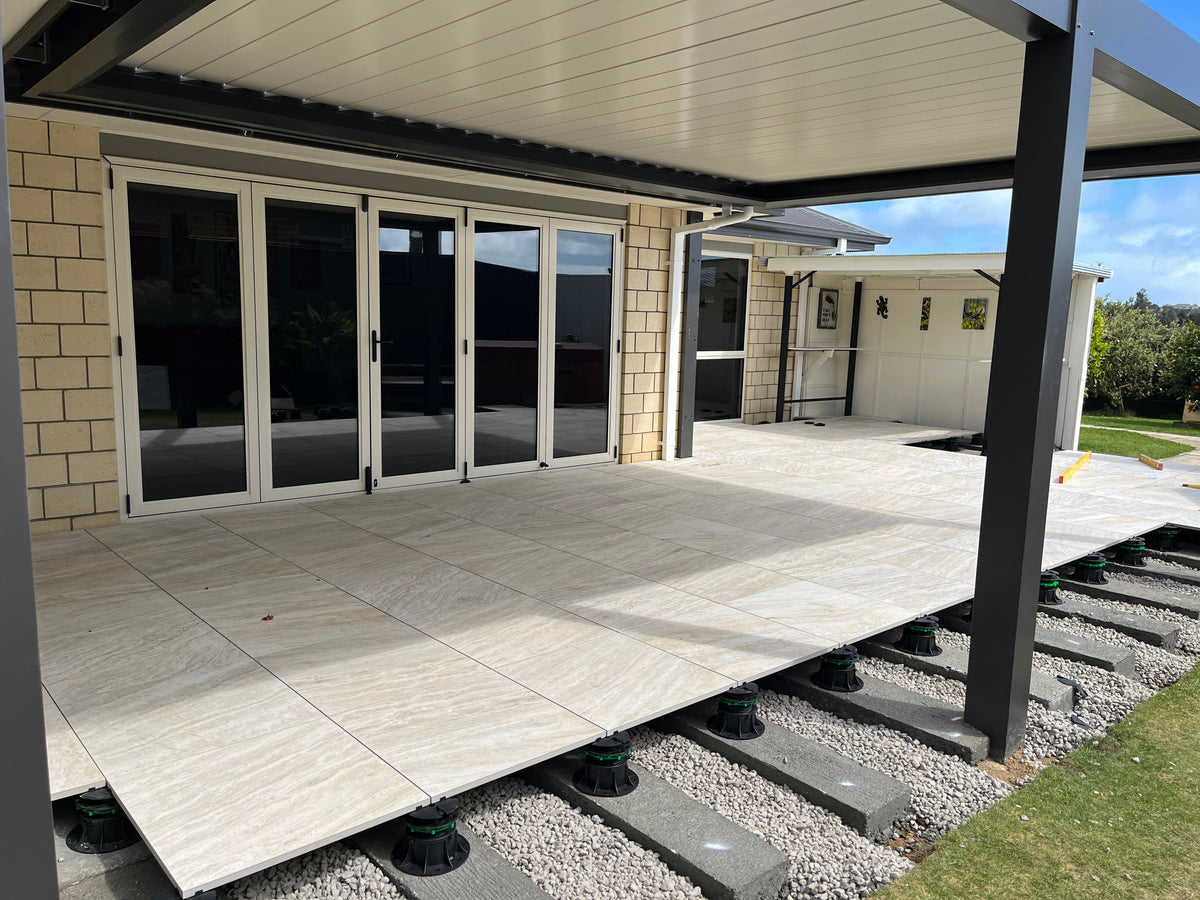
One of the big advantages of 20mm CMP porcelain is flexibility. At 20mm thick it is strong enough to be laid on a slab, on a sand and cement bed, or raised on pedestals. Here's how the three methods compare.
This is a general overview to help you plan. Always have porcelain installed by an experienced tiler or landscaper, following the adhesive manufacturer's instructions and the NZ Building Code.
At a glance
| Method | Best for | Watch out for |
|---|---|---|
| Bonded to a concrete slab | Pool surrounds, patios and paths with an existing or new slab | The slab needs falls for drainage, and movement joints must be carried through |
| Sand and cement bed | Ground-level paving where there's no slab | Needs a well-compacted base and a slurry bond coat on the back of each paver |
| Adjustable pedestals | Roof decks, balconies, over waterproof membranes, and over services | Needs a sound, waterproofed surface underneath and careful setting out |
1. Bonded to a concrete slab
The most common method around pools. The porcelain is fixed to a cured concrete slab with an exterior-grade flexible tile adhesive, then grouted.
- Use an adhesive rated for exterior use and for porcelain, and back-butter the pavers for full coverage. Large porcelain pavers need close to 100% adhesive contact outdoors.
- The slab should fall away from the pool and buildings so water drains off.
- Carry movement joints in the slab through the paving.
- Around the pool, the rebated coping is bedded onto the pool beam and the 20mm pavers butt up flush behind it.
2. Sand and cement bed
Where there's no slab, porcelain can be laid on a semi-dry sand and cement bed over a well-compacted base, similar to traditional paving.
- Porcelain is very dense, so it won't bond to the bed on its own. A slurry primer or bonding coat is applied to the back of each paver.
- The base must be properly compacted, with falls for drainage.
- Joints are filled with an exterior grout or jointing compound.
3. Adjustable pedestals
On roof decks, balconies, podiums and over waterproof membranes, 20mm porcelain can sit on UltraJack adjustable pedestals, with an open joint between pavers.
- Quick drainage: water runs straight through the joints and away underneath.
- Protects the membrane: no adhesive or mortar sits on the waterproofing, and the large pedestal base spreads the load.
- Level finish over falls: self-levelling heads give a flat surface on a sloping substrate.
- Hides services: pipes and cables can run in the void below.
- Removable: lift pavers for access, then put them back.
Pedestal systems over waterproofed decks can help with compliance with clause E3 of the NZ Building Code.


Tips for any method
- Order all your pavers and coping at once so they come from the same batch.
- Mix pavers from several boxes as you lay, for an even look.
- Clean off adhesive and grout residue before it cures.
- Porcelain doesn't need sealing. See our cleaning guide.
Not sure which method suits your site? Call us on 0800 446 378.