

How to clean porcelain and natural stone pavers
Regular sweeping and an occasional deep clean keep pavers and coping looking new. The same simple method works for both porcelain and natural stone.
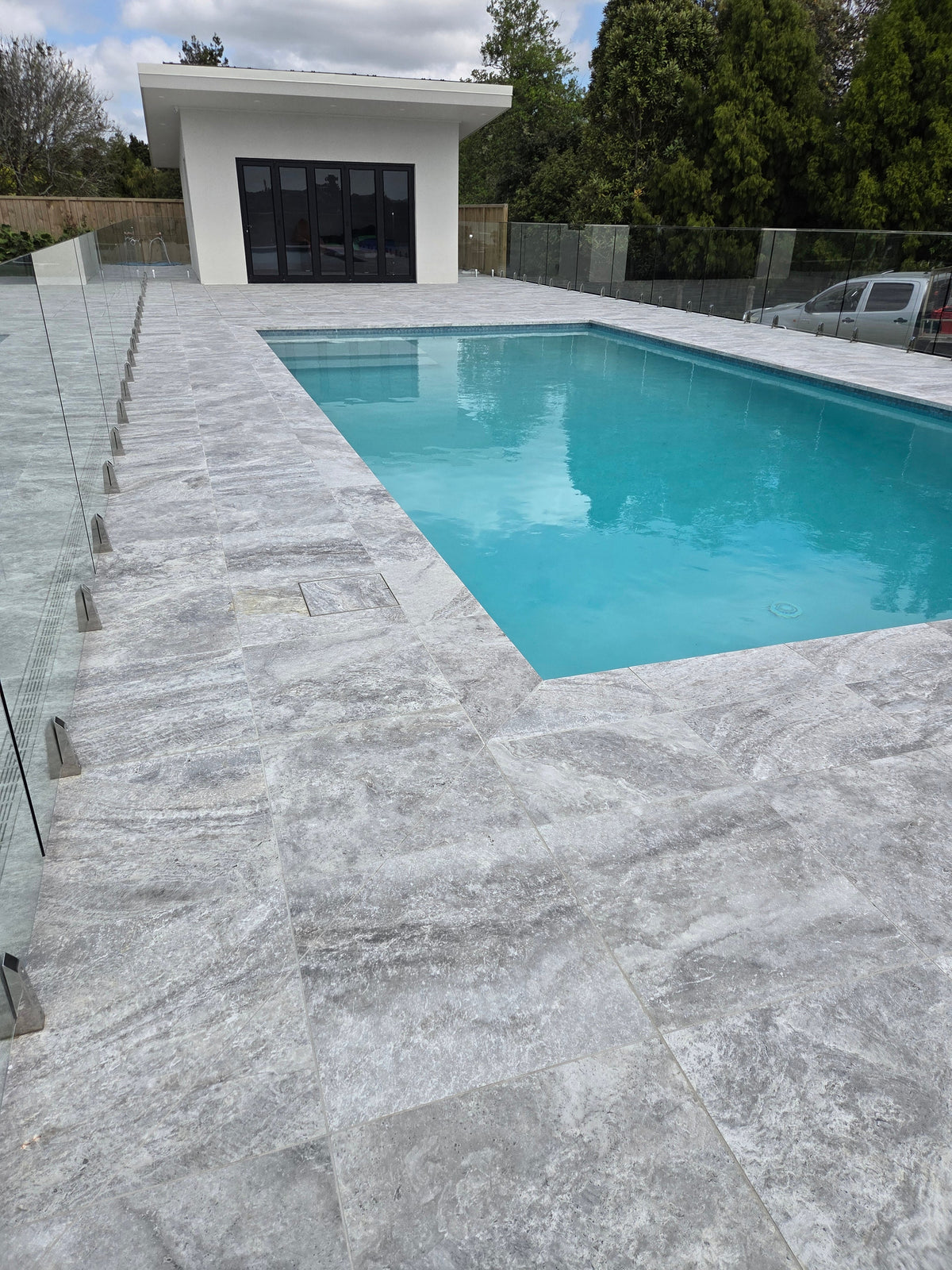
Outdoor surfaces collect dust, leaves, mould and pool splash, especially in New Zealand's damp winters. The same cleaning method works for both our porcelain and natural stone pavers and coping.


Everyday care
- Sweep regularly with a soft-bristle broom, and don't let leaves sit and stain.
- Rinse pool splash, especially salt water, off the surround and coping with fresh water.
- Wipe up spills such as oil, wine and barbecue fat promptly.
- Keep gutters and downpipes flowing so water doesn't pool on the paving.
Deep cleaning, step by step
- Sweep the area twice with a soft-bristle broom, first in the direction of the tiles, then on a diagonal.
- If there's a lot of dust or dirt, vacuum it up.
- Soak the surface with a 10:1 chlorine solution (10 parts water to 1 part chlorine) and leave it for 10 to 15 minutes. If that isn't cleaning well enough, strengthen it to 5:1.
- Scrub with a soft-bristle brush, again working in two directions.
- Water blast on low pressure, taking care not to wash out the grout.
- Rinse thoroughly with clean water to remove all the cleaning solution.
- For tiles used indoors, go over them with a damp mop.
- Dry with a clean towel or microfibre cloth.
Wear gloves and eye protection when using chlorine, and rinse the solution away from plants and lawn.

Sealing
Porcelain doesn't need sealing. We recommend sealing all natural stone. A good penetrating sealer makes the stone easier to clean and helps it resist staining, mould and salt. Reseal as often as the sealer manufacturer recommends. If water stops beading on the surface, it's time. Always clean the stone and let it dry fully before resealing.
Common problems
| Problem | What to do |
|---|---|
| White powdery bloom (efflorescence) | Common on new paving as salts come out of the bedding. Dry brush it off. It usually stops over time. |
| Green or black mould | Follow the deep-cleaning steps above, and improve drainage and sunlight where you can. |
| Leaf and tannin stains | Follow the deep-cleaning steps above as soon as you notice them. |
| Salt crust near the pool | Rinse with fresh water regularly. Keep natural stone sealed. |
Not sure about a particular stain? Call us on 0800 446 378 and we'll help.